
MBBS, Fellowship in Neuro · Reg. No. 30573 (Assam Council of Medical Registration)
Last reviewed:
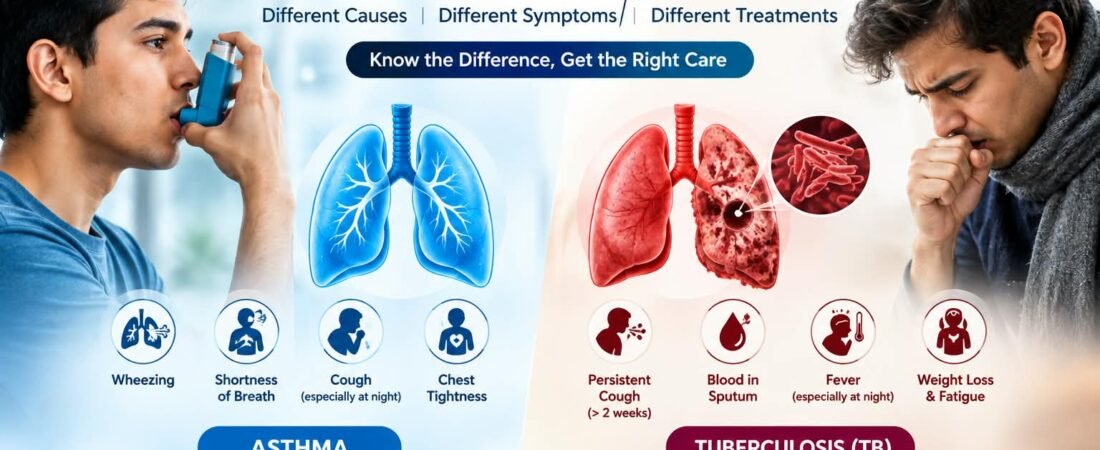
The difference between TB and asthma is important because both conditions can cause coughing and breathing problems, but they are very different diseases.
Tuberculosis (TB) is an infectious disease caused by bacteria. Asthma is a chronic condition in which the airways become inflamed and overly sensitive, leading to episodes of breathing difficulty.
Because some symptoms can overlap, such as cough, chest discomfort, and shortness of breath, it is important not to assume that every breathing problem is asthma or TB.
This guide explains the key differences between TB and asthma, their symptoms, causes, diagnosis, treatment, and when to seek medical care.
TB vs Asthma: Quick Comparison
| Feature | Tuberculosis (TB) | Asthma |
|---|---|---|
| Main cause | Infection with Mycobacterium tuberculosis | Airway inflammation and sensitivity |
| Infectious? | Yes, active TB of the lungs can spread to other people | No |
| Usually affects | Lungs, but can affect other organs | Airways |
| Cough | Often persistent; may produce mucus or blood | Often dry, but can produce mucus |
| Wheezing | May occur but is not the main symptom | Common in many people |
| Fever | Can occur, particularly with active TB | Usually not caused by asthma itself |
| Night symptoms | Cough and other symptoms may occur | Cough, wheezing, or breathlessness may worsen at night |
| Triggers | Infection | Allergens, exercise, cold air, smoke and other triggers |
| Long-term pattern | Depends on TB infection and treatment | Often recurring or chronic |
| Diagnosis | Tests may include sputum testing, chest imaging and other investigations | Medical history, examination and breathing tests |
The symptoms and diagnostic findings can vary, so a healthcare professional should assess persistent respiratory symptoms.
What Is Tuberculosis?
Tuberculosis, commonly called TB, is an infectious disease caused by bacteria called Mycobacterium tuberculosis.
TB most often affects the lungs, although it can affect other parts of the body.
When TB affects the lungs, symptoms may include:
- Persistent cough
- Coughing up mucus
- Coughing up blood in some cases
- Fever
- Night sweats
- Unexplained weight loss
- Tiredness or weakness
- Chest pain
- Shortness of breath
Not everyone with TB has every symptom.
Active pulmonary TB can spread from person to person through the air, particularly when an infected person coughs, speaks, or sneezes.
For this reason, suspected TB requires appropriate medical assessment and testing.
What Is Asthma?
Asthma is a chronic condition that affects the airways.
In people with asthma, the airways can become inflamed and more sensitive to certain triggers. The muscles around the airways may tighten, causing the airways to become narrower.
Common asthma symptoms include:
- Wheezing
- Shortness of breath
- Chest tightness
- Coughing
- Breathing difficulty during exercise
- Symptoms that may become worse at night or early in the morning
Common asthma triggers include:
- Cold air
- Dust
- Pollen
- Smoke
- Air pollution
- Respiratory infections
- Exercise
- Animal allergens
Asthma is not contagious and cannot spread from one person to another.
Difference Between TB and Asthma Symptoms
One of the main reasons people search for TB vs asthma is that both conditions can cause cough and breathing difficulty.
However, the pattern of symptoms can be different.
Cough
TB may cause a persistent cough, particularly when the lungs are affected. The cough may produce mucus, and some people may cough up blood.
Asthma can also cause a persistent or recurring cough. It may be worse at night, early in the morning, during exercise, or after exposure to a trigger.
Wheezing
Wheezing is a common asthma symptom. It is a high-pitched sound that may occur when breathing.
Wheezing is not usually the defining symptom of TB. If someone has wheezing with a persistent cough, asthma is one possible cause, but other respiratory conditions can also cause it.
Fever
Fever can occur with active TB.
Asthma itself usually does not cause fever. If a person with asthma develops a fever, another condition such as a respiratory infection may be responsible.
Night Sweats and Weight Loss
Night sweats and unexplained weight loss can occur with TB and should be medically evaluated.
They are not typical features of uncomplicated asthma.
Shortness of Breath
Both TB and asthma can cause shortness of breath.
With asthma, breathlessness often occurs in episodes and may be associated with wheezing, chest tightness, or known triggers. Cold air is a common one, as explained in our guide to shortness of breath in winter.
With pulmonary TB, breathlessness may occur alongside a persistent cough and other signs of infection, particularly when the disease is more advanced.
Is TB Contagious and Is Asthma Contagious?
This is one of the most important differences between TB and asthma.
TB can be contagious. When a person has infectious pulmonary TB, bacteria can spread through the air to other people.
Asthma is not contagious. You cannot catch asthma from another person.
If someone has symptoms that could indicate TB, appropriate testing and medical advice are important, particularly if they have prolonged cough, fever, night sweats, weight loss, or a history of close contact with someone who has TB.
Can TB Be Mistaken for Asthma?
Sometimes respiratory symptoms can overlap.
A person with TB may initially notice coughing or breathing difficulty and assume it is asthma or another common respiratory problem.
However, persistent cough accompanied by symptoms such as fever, night sweats, unexplained weight loss, chest pain, or coughing up blood needs medical evaluation.
Similarly, not every chronic cough means TB. Asthma, allergies, bronchitis, reflux, smoking, and other conditions can also cause persistent cough (see how to get rid of a cough for common causes and home care).
The correct diagnosis requires an assessment rather than relying only on symptoms.
How Are TB and Asthma Diagnosed?
TB Diagnosis
Depending on the person’s symptoms and clinical situation, doctors may recommend tests such as:
- Chest X-ray or other imaging
- Sputum testing
- Molecular tests for TB
- Other laboratory investigations
- Additional tests when TB affects parts of the body outside the lungs
Our cough test guide explains these investigations in more detail. The exact tests depend on the suspected type of TB and the patient’s symptoms.
Asthma Diagnosis
Asthma diagnosis generally involves:
- Medical history
- Physical examination
- Assessment of symptom patterns and triggers
- Lung function or breathing tests when appropriate
- Additional testing when needed
Because asthma symptoms can overlap with other respiratory conditions, doctors may also investigate alternative causes.
TB vs Asthma: How Treatment Differs
TB and asthma require completely different treatment approaches.
TB Treatment
TB is treated with specific anti-tuberculosis medicines. Treatment usually involves a combination of medicines taken for a prescribed period.
It is important to complete TB treatment exactly as directed by the treating healthcare professional.
Stopping treatment early or taking medicines incorrectly can lead to treatment failure and drug resistance.
Asthma Treatment
Asthma treatment depends on the severity and pattern of symptoms.
Treatment may include inhaled medicines that help control airway inflammation and medicines that provide relief from symptoms when prescribed.
Asthma management may also involve identifying and reducing exposure to personal triggers.
Asthma medicines should be used according to the treatment plan provided by a healthcare professional.
Can Someone Have Both TB and Asthma?
Yes, a person can have more than one respiratory condition.
Having asthma does not prevent someone from developing a respiratory infection, including TB.
If a person with asthma develops a persistent cough, fever, unexplained weight loss, night sweats, coughing up blood, or a significant change in breathing, the symptoms should be evaluated rather than automatically attributed to asthma.
When Should You See a Doctor?
Medical evaluation is recommended when breathing symptoms are persistent, recurrent, or unexplained. A general physician in Hojai can be the first point of contact for cough with fever.
See a healthcare professional if you have:
- A cough that does not improve
- Repeated episodes of wheezing
- Persistent shortness of breath
- Chest pain
- Fever with respiratory symptoms
- Night sweats
- Unexplained weight loss
- Coughing up blood
- Breathing symptoms that are becoming worse
If you are looking for respiratory evaluation in Hojai, you can learn more about Pulmonary & Respiratory Services in Hojai.
When Is Breathing Difficulty an Emergency?
Severe breathing difficulty requires urgent medical attention.
Seek emergency medical help if you:
- Are struggling to breathe
- Cannot speak normally because of breathlessness
- Develop blue or grey lips or skin
- Have severe chest pain
- Become confused or unusually drowsy
- Cough up a significant amount of blood
- Experience rapidly worsening breathing symptoms
Do not wait for symptoms to resolve on their own when breathing difficulty is severe. Call 108 or 112 or go to the nearest emergency hospital.
Frequently Asked Questions
What is the main difference between TB and asthma?
TB is an infectious disease caused by bacteria, while asthma is a chronic airway condition involving inflammation and increased airway sensitivity. TB can be contagious when it involves infectious pulmonary disease, while asthma is not contagious.
Is coughing a symptom of both TB and asthma?
Yes. Both TB and asthma can cause coughing, but the pattern may differ. TB can cause a persistent cough and may be associated with fever, night sweats, weight loss, or coughing up blood. Asthma commonly causes recurring cough with wheezing, chest tightness, or shortness of breath.
Is wheezing more common in asthma than TB?
Yes. Wheezing is a common asthma symptom. It can occur with other lung conditions too, but it is not considered a typical defining symptom of TB.
Can asthma turn into TB?
No. Asthma does not turn into TB. They are separate medical conditions with different causes.
Can TB cause shortness of breath?
Yes. Pulmonary TB can cause shortness of breath, particularly when the disease significantly affects the lungs.
Can TB and asthma occur together?
Yes. A person can have asthma and develop TB or another respiratory infection. New or changing symptoms should be assessed rather than automatically attributed to an existing diagnosis.
How can I tell whether my cough is TB or asthma?
Symptoms alone cannot reliably distinguish TB from asthma. Persistent cough, fever, night sweats, unexplained weight loss, or coughing up blood should prompt medical evaluation. A healthcare professional can determine which tests are appropriate.
Final Takeaway
The difference between TB and asthma is important because they have different causes, risks, and treatments.
TB is an infectious disease that can affect the lungs and may cause persistent cough, fever, night sweats, weight loss, and other symptoms. Asthma is a chronic airway condition that commonly causes episodes of wheezing, coughing, chest tightness, and shortness of breath.
Because respiratory symptoms can overlap, persistent or unusual symptoms should not be self-diagnosed.
If you have ongoing cough, wheezing, shortness of breath, or other respiratory concerns in Hojai, consider getting an appropriate medical evaluation.
Medical disclaimer: This article is for general educational information only. It does not replace a medical examination, diagnosis, or individualized treatment from a qualified healthcare professional.
Book a Consultation in Hojai
If you have a cough that is not settling, repeated wheezing, or you are worried about TB or asthma, a doctor can examine you and arrange the right tests. Book a consultation at Dr Shahrukh Neuro Polyclinic in Hojai or call / WhatsApp +91 94352 08813. The clinic on Mikir Basti Road, Danki Gaon, Hojai is open 24 hours, 7 days a week. It is not an emergency hospital, so for a life-threatening emergency call 108 or 112 first.