A Complete Guide to Medical Abortion in Riyadh
Legal Status of Abortion in Saudi Arabia
1. Abortion in Saudi Arabia is subject to specific legal and medical requirements and is not generally available on request. Saudi regulations allow abortion only in certain exceptional circumstances, particularly when continuing a pregnancy presents a serious risk to the mother’s health or life. The procedure must be carried out through the appropriate licensed medical system and according to applicable regulations.
2. Medical abortion may involve medicines such as mifepristone and misoprostol, but their use for an induced abortion should only be considered within an appropriately authorized medical setting and according to applicable Saudi regulations. The Saudi Ministry of Health also advises pregnant women to consult a doctor or pharmacist regarding medicines used during pregnancy.
3. Pregnancy duration is an important factor in determining whether an abortion may legally and medically be considered. Saudi government information describes a limit of 120 days (approximately four months) for certain permitted circumstances, with stricter requirements after this point.
4. Because Saudi abortion regulations can be complex and circumstances differ between patients, women should obtain an assessment from a licensed healthcare professional in Saudi Arabia rather than relying on online medication sources or purchasing controlled medicines from unlicensed providers. The Ministry of Health has recently taken enforcement action against unlicensed healthcare practice and unauthorized promotion of controlled medicines associated with medically supervised abortion cases.
Abortion Pills in Riyadh – Medical Information
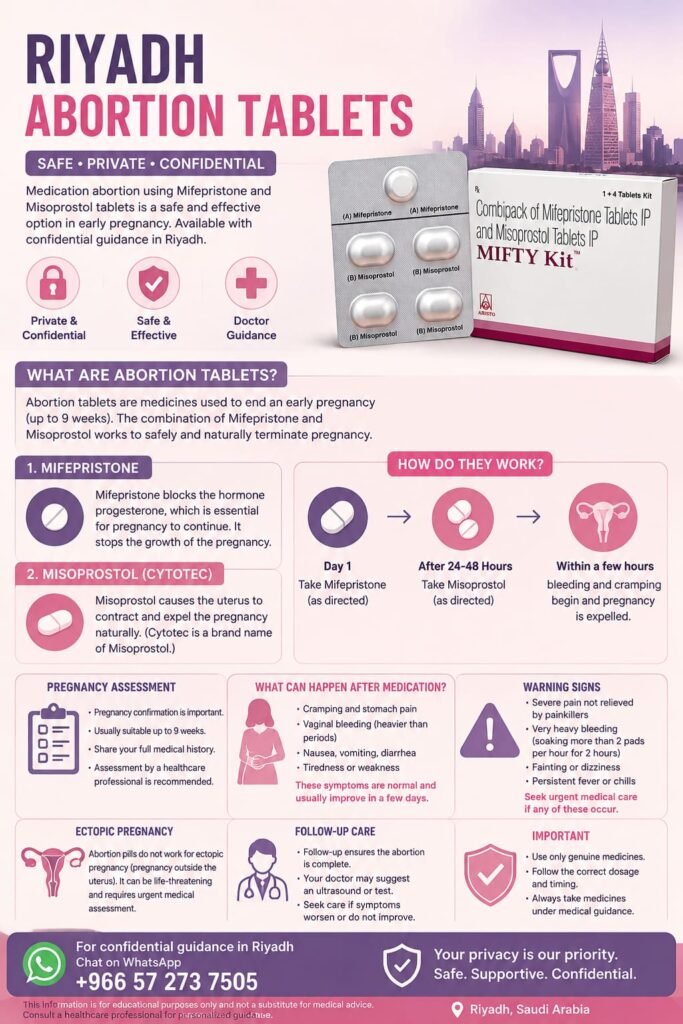
What Are Abortion Pills?
Abortion pills are medicines used to end an early pregnancy. A commonly used medication-abortion regimen involves mifepristone and misoprostol, which work together to end the pregnancy and help the uterus expel the pregnancy tissue.
How Do They Work?
Mifepristone blocks the hormone progesterone, which is needed to maintain a pregnancy. Misoprostol causes the uterus to contract, leading to cramping and bleeding as the pregnancy is expelled.
Pregnancy Assessment
Before taking medication for an abortion, it is important to confirm the pregnancy and determine how far it has progressed. A healthcare professional may also review your medical history and other factors that could affect treatment.
An ectopic pregnancy should also be considered. Abortion pills do not treat an ectopic pregnancy, which can be a medical emergency if it ruptures.
What Can Happen After Medication?
After taking abortion medication, it is common to experience cramping and vaginal bleeding. Some women may also have nausea, vomiting, diarrhea, tiredness, or temporary weakness.
The amount of bleeding and discomfort can vary from person to person. If you are concerned about your symptoms, contact a healthcare professional for advice.
Warning Signs
Seek urgent medical care if you experience severe or worsening abdominal pain, very heavy bleeding, fainting or significant dizziness, or persistent fever or chills.
These symptoms may require prompt medical assessment.
Follow-Up Care
Follow-up care is important to confirm that the abortion has been completed. Depending on the circumstances, a healthcare professional may recommend an ultrasound, pregnancy test, or another appropriate follow-up assessment.
You should seek medical advice if symptoms become worse, do not improve, or if you continue to have concerns after treatment.
Important
Abortion medicines should be used only with appropriate medical guidance and from a reliable, legally authorized source. A qualified healthcare professional can assess your pregnancy, review your medical history, and explain the safest and legally appropriate options available in your circumstances.
SAFE ABORTION WITH MIFEPRISTONE & MISOPROSTOL, uses
WOMEN HELP WOMEN
SAFE ABORTION WITH
MIFEPRISTONE & MISOPROSTOL
For pregnancy up to 9 weeks
DAY 1
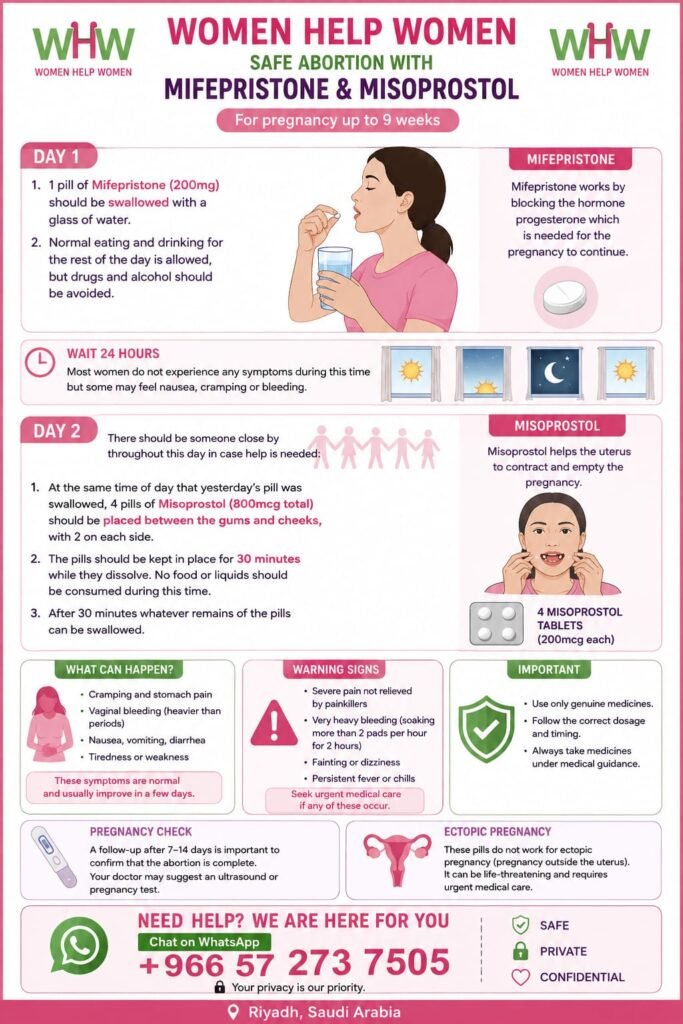
1. 1 pill of Mifepristone (200mg) should be swallowed with a glass of water.
2. Normal eating and drinking for the rest of the day is allowed, but drugs and alcohol should be avoided.
MIFEPRISTONE
Mifepristone works by blocking the hormone progesterone which is needed for the pregnancy to continue.
WAIT 24 HOURS
Most women do not experience any symptoms during this time but some may feel nausea, cramping or bleeding.
DAY 2
There should be someone close by throughout this day in case help is needed:
1. At the same time of day that yesterday’s pill was swallowed, 4 pills of Misoprostol (800mcg total) should be placed between the gums and cheeks, with 2 on each side.
2. The pills should be kept in place for 30 minutes while they dissolve. No food or liquids should be consumed during this time.
3. After 30 minutes whatever remains of the pills can be swallowed.
MISOPROSTOL
Misoprostol helps the uterus to contract and empty the pregnancy.
4 MISOPROSTOL TABLETS
(200mcg each)
WHAT CAN HAPPEN?
• Cramping and stomach pain
• Vaginal bleeding (heavier than periods)
• Nausea, vomiting, diarrhea
• Tiredness or weakness
These symptoms are normal and usually improve in a few days.
WARNING SIGNS
• Severe pain not relieved by painkillers
• Very heavy bleeding (soaking more than 2 pads per hour for 2 hours)
• Fainting or dizziness
• Persistent fever or chills
Seek urgent medical care if any of these occur.
IMPORTANT
• Use only genuine medicines.
• Follow the correct dosage and timing.
• Always take medicines under medical guidance.
PREGNANCY CHECK
A follow-up after 7–14 days is important to confirm that the abortion is complete. Your doctor may suggest an ultrasound or pregnancy test.
ECTOPIC PREGNANCY
These pills do not work for ectopic pregnancy (pregnancy outside the uterus). It can be life-threatening and requires urgent medical care.
NEED HELP? WE ARE HERE FOR YOU
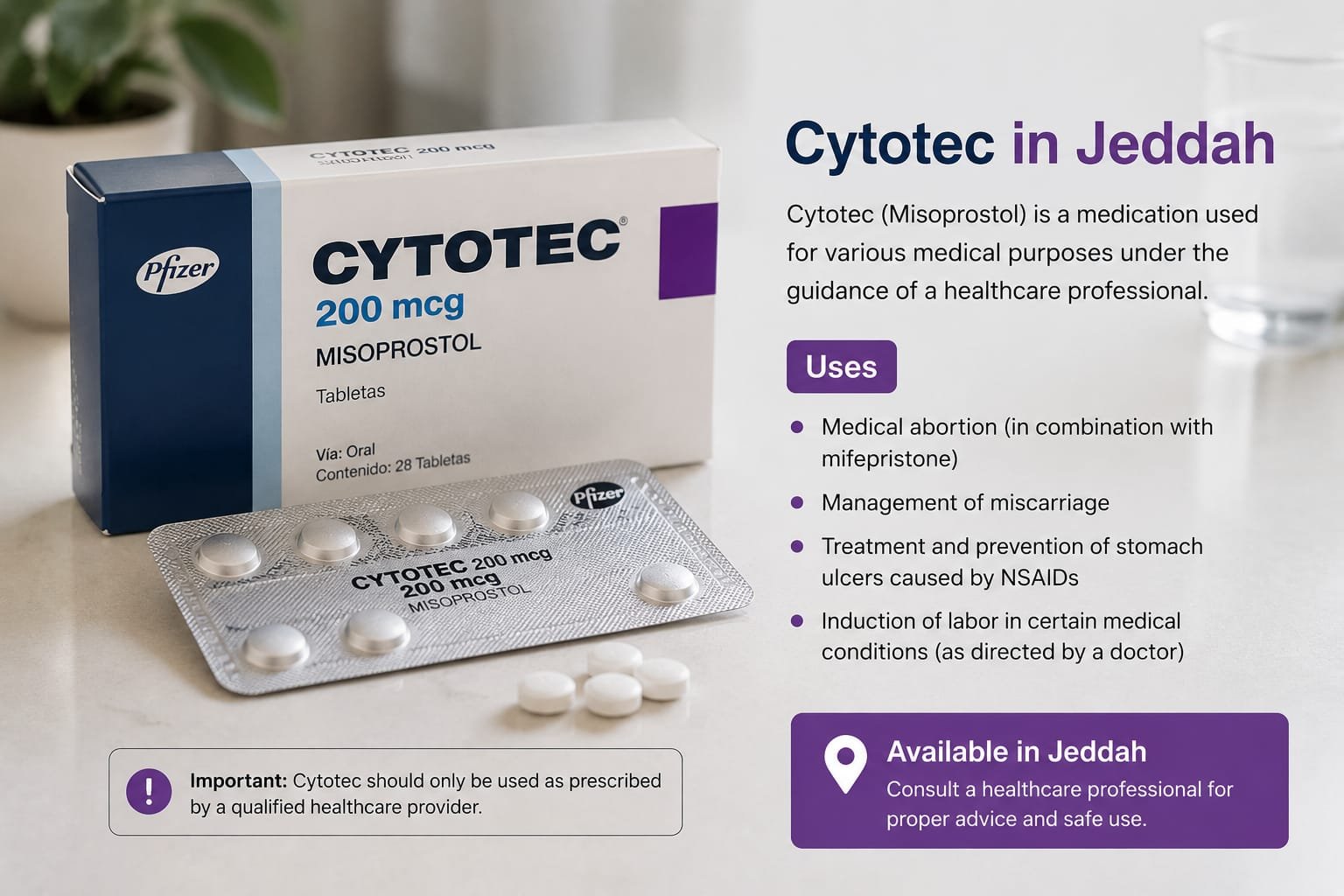
Cytotec, also known as misoprostol, is a medicine commonly used to help prevent stomach ulcers in people taking certain NSAIDs, such as aspirin, ibuprofen, or naproxen. It helps protect the stomach lining from acid-related injury. In some medical circumstances, misoprostol may also be used with mifepristone for medication abortion, under appropriate medical supervision.
How Is Cytotec Used?
The dose and method of use depend on the medical condition being treated. Misoprostol can cause side effects such as diarrhea, nausea, abdominal cramps, and bleeding. Always use it according to a healthcare professional’s instructions and seek medical advice if symptoms are severe or unusual.
MTP Kit in Riyadh | Medical Information & Safe Use
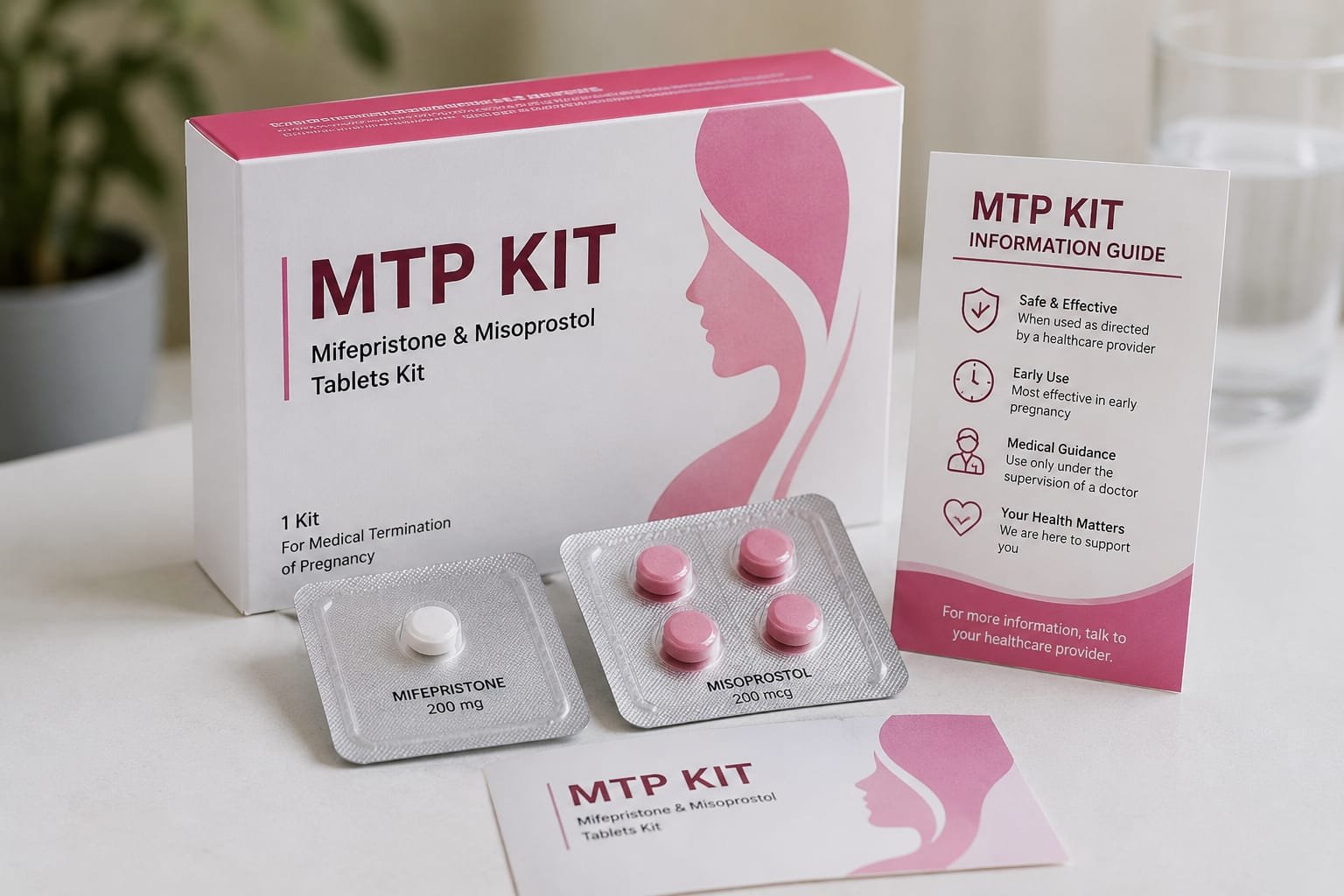
Mtp Kit is a combination of two medicines, which is used for medical abortion (terminating a pregnancy). This medicine blocks the action of progesterone, a female hormone required to maintain pregnancy and induce contractions in the uterus, which further helps in abortion.
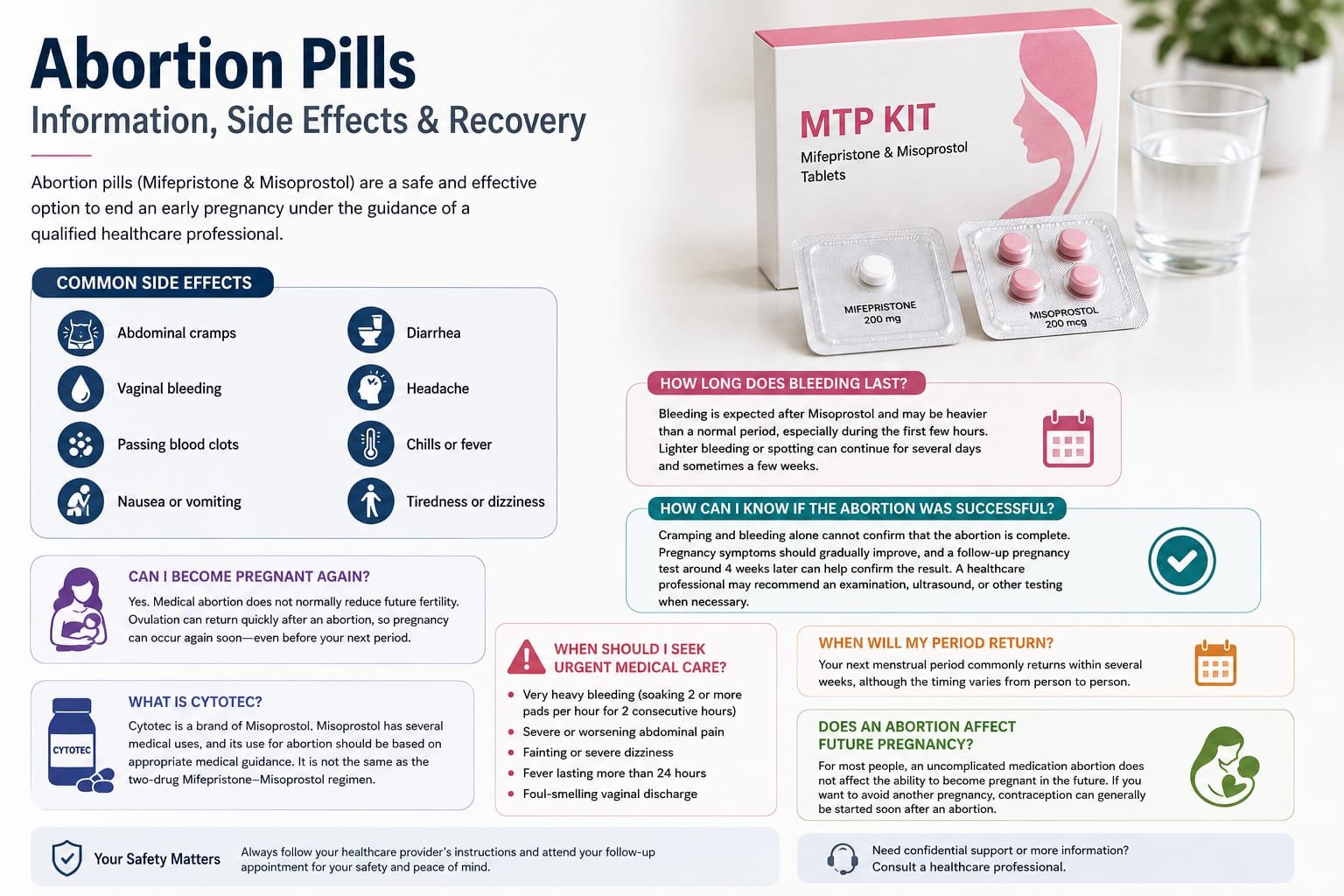
Abortion Pills: Side Effects, Recovery, Success & Pregnancy After Abortion
Common Side Effects of Abortion Pills
Abortion medicines containing mifepristone and misoprostol can cause temporary symptoms as the pregnancy passes. Common effects include abdominal cramping, vaginal bleeding, passing blood clots, nausea, vomiting, diarrhea, headache, chills, a short-lasting fever, tiredness, or dizziness.
The intensity of these symptoms can vary from person to person. If you are concerned about how you feel or your symptoms seem unusually severe, contact a healthcare professional.
How Long Does Bleeding Last After Taking Abortion Pills?
Bleeding is expected after misoprostol and can be heavier than a normal menstrual period, particularly during the first few hours. After the heavier bleeding settles, lighter bleeding or spotting may continue for several days and, in some cases, a few weeks.
If bleeding becomes unusually heavy or you feel faint or very weak, seek urgent medical attention.
How Can I Know If the Abortion Was Successful?
Bleeding and cramping do not, by themselves, confirm that the abortion is complete. Pregnancy symptoms should gradually improve, but follow-up is still important.
A follow-up pregnancy test around 4 weeks later can help confirm the result. Depending on your circumstances, a healthcare professional may also recommend an examination, ultrasound, or other testing.
Can I Become Pregnant Again After Using Abortion Pills or Cytotec?
Yes. An uncomplicated medical abortion does not normally reduce future fertility. Ovulation can return relatively quickly after an abortion, which means pregnancy can occur again before your next menstrual period.
If you do not want another pregnancy, speak with a healthcare professional about contraception and when you can start using it.
When Should I Seek Urgent Medical Care?
Seek urgent medical attention if you experience very heavy bleeding, severe or worsening abdominal pain, fainting, or possible signs of infection, including persistent fever or foul-smelling vaginal discharge.
Prompt medical assessment is especially important if symptoms are severe, unexpected, or getting worse.
When Will My Period Return After an Abortion?
Your next menstrual period usually returns within several weeks, although the timing can vary between individuals. The first period after an abortion may also be somewhat different from your usual periods.
Does an Abortion Affect Future Pregnancy?
For most people, an uncomplicated medication abortion does not affect the ability to become pregnant in the future. Fertility can return soon after an abortion.
If you want to prevent another pregnancy, contraception can generally be started promptly, depending on the method and your healthcare professional’s advice.
Abortion Pills: What to Expect
Knowing what bleeding and other side effects may occur can make the recovery period less stressful. Follow-up care is also important because symptoms alone cannot always confirm that the abortion is complete.
If you experience severe pain, very heavy bleeding, fainting, persistent fever, or other concerning symptoms, seek medical care promptly.