
MBBS, MS (Obstetrics & Gynaecology) · Reg. No. 25464 (Assam Council of Medical Registration)
Last reviewed:
Written by Dr. Shahrukh Khan Bahadur, MBBS, Fellowship in Neuro.
Pain in the pelvic area during pregnancy is common, and it can range from a dull ache to pain sharp enough to make walking difficult. In many cases the cause is pelvic girdle pain (PGP), a treatable condition. But not every pelvic pain in pregnancy is PGP, so it helps to know what’s typical and what needs prompt attention.
PGP and SPD: what’s the difference?
Both terms are used. Previously the term ‘Symphysis Pubis Dysfunction’ (SPD) was used to describe pain at the symphysis pubis, the joint at the front of the pelvis. Pain may occur at the other joints of the pelvis as well, for example at the sacroiliac joints, which are at the back. Hence the more general term ‘Pelvic Girdle Pain’ (PGP) is used. The term SPD is still used by the general public and is sometimes used interchangeably with PGP.
The pelvic girdle is made up of a number of joints. In PGP one or more of these joints may become unstable and move too much. The supporting ligaments and muscles may become strained and irritated as a result. The reason for this instability is not fully understood. It is thought that hormonal changes may soften the supporting ligaments of the pelvis. Changes in a pregnant woman’s centre of gravity and the additional weight of the enlarging abdomen may also contribute.
How common is pelvic pain in pregnancy?
Around one in five pregnant women experience pelvic pain. It can begin at any point in pregnancy and often becomes more noticeable as the baby grows (our fetal growth by week guide shows how quickly that happens). PGP does not harm the baby, but it can significantly affect the mother’s comfort and mobility.
What does it feel like?
Pain may be felt in or around:
- The pubic bone at the front
- The lower back, especially over the sacroiliac joints
- The hips, groin, buttocks or upper thighs
- The area between the vagina and anus
Some women also notice clicking or grinding in the pelvis. Symptoms tend to be worse with movement, such as:
- Walking long distances or on uneven ground
- Climbing stairs
- Standing on one leg, for example while dressing
- Getting in or out of a car or bath
- Turning over in bed
- Moving the legs apart
- Some sexual positions
Who is more likely to get it?
You may be at higher risk if you:
- Have had back problems or a pelvic injury
- Had PGP in an earlier pregnancy
- Have a physically demanding job
- Are overweight
- Have joint hypermobility
Having none of these doesn’t rule PGP out. Many women with no risk factors are affected.
Other causes of pelvic pain in pregnancy
Because PGP is common, it’s easy to assume every pelvic pain is PGP. It isn’t. Other possible causes include:
- Urinary tract infection, often with burning or frequent urination
- Early pregnancy complications, where pain with bleeding needs urgent assessment
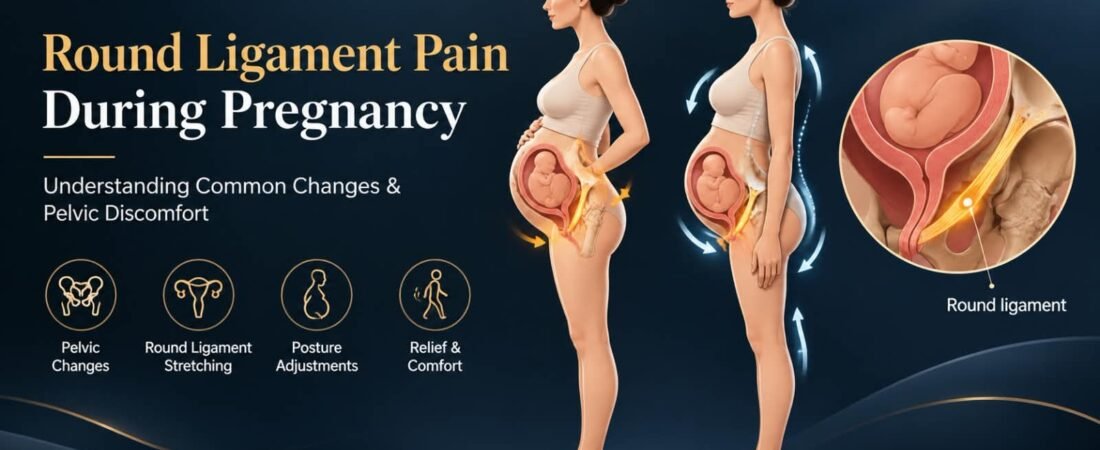
- Round ligament pain, a sharp pull in the lower abdomen or groin on sudden movement
- Constipation and gas, which are very common in pregnancy
- Labour or preterm labour, if pain comes in regular waves
- Pelvic or other infections, which usually bring fever or feeling unwell
This is why the pattern of pain matters: where it is, what triggers it, and what else is happening.
When to seek medical advice
Get assessed promptly if pelvic pain comes with any of the following:
- Vaginal bleeding
- Unusual discharge or leaking fluid
- Fever or chills
- Pain or burning when passing urine
- Severe or worsening abdominal pain
- Regular tightenings or contractions
- Dizziness or fainting
- Vomiting with significant pain
- Sudden severe pain, or pain that stops you walking
Heavy bleeding, fainting, fits, severe pain or reduced baby movements need urgent care. Go to the nearest hospital or call 108 or 112. Don’t wait for an appointment. Bleeding with cramps in the early months is explained in our guide to miscarriage symptoms and warning signs.
How pelvic pain is assessed
When assessing pelvic pain, your doctor or midwife will ask where the pain is, when it started and what makes it better or worse, and about bleeding, discharge, urinary symptoms and your due date. They will also ask about any past pelvic or back pain.
A physiotherapist will take a similar history and look at the way you move, your posture and the alignment of your hips, pelvis, and spine. They will also consider other possible causes of your symptoms.
Treatment: what helps and what the evidence says
Getting assessed early helps, because prompt advice can stop the pain from worsening. Current NICE antenatal care guidance says clinicians should consider referring women with pelvic girdle pain to physiotherapy. This may include:
- Advice on movement and rest
- Exercises for the abdominal, pelvic floor, back and hip muscles
- Manual therapy in suitable cases
- A pelvic support belt
- Crutches or other walking aids if pain is severe
NICE has also found the evidence too limited to recommend acupuncture, hot or cold packs, or painkillers specifically for PGP. Some women still find warmth or a warm bath comforting, and that is fine to try if it feels good. If you want a painkiller, ask your doctor or midwife first. Paracetamol is the usual first choice in pregnancy, and your doctor will advise how to take it. Avoid taking other pain medicines without medical advice.
Practical ways to ease the pain
Alongside any physiotherapy advice, many women find these helpful:
- Wear flat, supportive shoes.
- Sleep with a pillow between your knees and another under your bump.
- Keep your weight even on both legs when standing.
- Keep your knees together when getting in or out of a car, and sit down to dress.
- Take small steps rather than large ones.
- Avoid staying in one position for more than about 30 minutes.
- Limit stairs, heavy lifting, and carrying a child on one hip.
- Avoid sitting on the floor cross-legged or twisted.
- Ask family and friends to help with tasks that trigger pain.
Pain that shoots from the lower back or buttock down one leg may come from an irritated nerve. Our page on sciatica and back pain treatment in Hojai explains that problem; in pregnancy, always check with your doctor before starting any treatment.
Staying active
Being active is still good for you and the baby, but pick movement that doesn’t cause pain. Walking short distances, swimming and gentle exercises recommended by your physiotherapist often suit better than long walks or high-impact activity. Rest when you need to.
PGP and blood clots
Pregnancy raises the risk of deep vein thrombosis (DVT), and the risk rises further if pain limits how much you move. Tell your midwife or doctor if you’re finding it hard to get around, as they may suggest compression stockings or, in some cases, blood-thinning medication.
Contact a doctor promptly for pain, swelling or tenderness in one leg (often the calf), warmth, or red or dark skin. Sudden breathlessness, chest pain or coughing blood are emergencies: seek immediate help.
The emotional side
Constant pain and poor sleep can wear anyone down. Women with PGP often describe frustration, guilt and low mood, especially when they can’t do everyday things or look after other children. If your mood is suffering, say so at your next appointment. It’s a real part of the condition, not a complaint to hide.
Labour, birth and afterwards
Pelvic pressure often increases in the last month as the baby moves down; see what else to expect in our article on 36 weeks of pregnancy. Regular antenatal visits are the best place to raise these symptoms, and you can arrange pregnancy care in Hojai at our clinic. Recovery after delivery is covered in our guide to the postpartum period.
Birth: PGP doesn’t mean you can’t have a vaginal birth, and most women with PGP can. There’s no evidence that a caesarean is better for PGP. Tell your maternity team about your PGP early and note it in your birth plan, including which positions are comfortable and how far apart your legs can go, so they can support your legs and help you change position.
After birth: For most women, PGP improves within days to weeks of delivery. About one in ten have pain that lasts longer. If you’re still in pain, continue any prescribed treatment and ask your doctor about referral rather than living with it.
Next pregnancy: If you’ve had PGP before, it’s more likely to return. Staying fit and strengthening your abdominal and pelvic floor muscles beforehand may reduce the risk.
Consulting a gynecologist in Hojai
If pelvic pain in pregnancy is persistent, worsening, limiting your daily life, or comes with any warning signs above, a proper assessment can identify the cause and guide treatment or referral. To learn more about local women’s healthcare, see our page on a gynecologist in Hojai.
For assessment of pelvic pain in pregnancy and regular antenatal check-ups, you can consult Dr Pooja Singh, MBBS, MS (Obs & Gynae). Book a consultation at Dr Shahrukh Neuro Polyclinic in Hojai or call +91 94352 08813. The clinic on Mikir Basti Road, Danki Gaon, Hojai is open 24 hours, 7 days a week. We are not an emergency hospital, so in an emergency call 108 or 112.
Frequently Asked Questions
Is pain in the pelvic area during pregnancy normal?
It’s common, but that doesn’t mean it should be ignored. PGP is a recognised, treatable condition, and other causes of pelvic pain need to be ruled out.
Can pelvic pain in pregnancy harm my baby?
PGP itself does not harm the baby. Pain from other causes, such as infection or bleeding, may need treatment, so get concerning symptoms checked.
Is SPD the same as PGP?
They overlap. SPD refers to the pubic joint at the front, while PGP is the broader, now-preferred term.
Can I have a normal delivery with PGP?
Most women with PGP can have a vaginal birth. Let your maternity team know so they can adapt positions.
Will it go away after delivery?
It usually improves within weeks to months, though some women have longer-lasting pain and should seek further assessment.
Does a support belt help?
Some women find one useful, and NICE mentions considering one as part of physiotherapy. It works best when recommended and fitted by a physiotherapist.
Conclusion
Pain in the pelvic area during pregnancy has several possible causes, and PGP is the most common. It’s treatable, and early physiotherapy advice, sensible activity changes and support can make a real difference. Persistent, severe, worsening or unusual pain should never be dismissed as “just pregnancy”, so speak to a doctor or midwife if you’re worried.
This article is for general information and isn’t a substitute for personal medical advice.
References
- NICE (2021). Antenatal care, NG201. NICE guidance NG201
- RCOG. Pelvic girdle pain and pregnancy – Patient Information. RCOG
- NHS. Pelvic pain in pregnancy. NHS
- NHS inform. Pelvic girdle pain. NHS inform
- NHS. Deep vein thrombosis in pregnancy. NHS – DVT in pregnancy