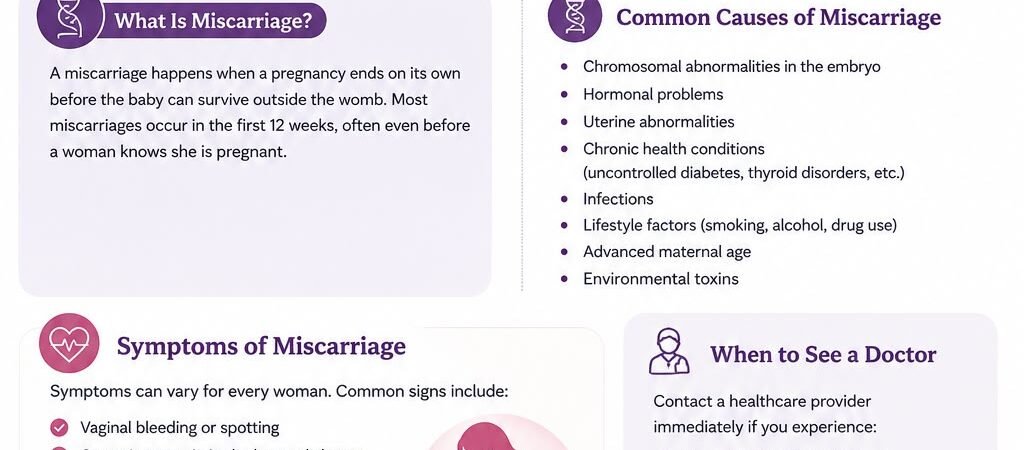
A miscarriage is the loss of a pregnancy during the early stages of pregnancy. It can be physically difficult and emotionally upsetting, and many people experience feelings of sadness, grief, confusion, or guilt afterward. In most cases, a miscarriage is not caused by something the pregnant person did.
Pregnancy Miscarriage Symptoms Information
What Is a Miscarriage?
A miscarriage, sometimes called a spontaneous abortion in medical terminology, is when a pregnancy ends naturally before 20 weeks of pregnancy.
Miscarriage can occur at different stages of early pregnancy, although most happen during the first several weeks. Sometimes the pregnancy ends before a person realizes they are pregnant.
When Does Miscarriage Usually Occur?
Most miscarriages happen during the first trimester or early part of pregnancy. The risk generally decreases as pregnancy progresses.
A miscarriage can happen suddenly, with bleeding and cramping, or it may be discovered during an ultrasound when there are few or no noticeable symptoms.
How Common Is Miscarriage?
Miscarriage is relatively common. Medical estimates indicate that approximately 10–20% of recognized pregnancies end in miscarriage.
Although it is medically common, pregnancy loss can still be deeply emotional. It is normal to experience sadness, anxiety, anger, disappointment, or grief. Emotional recovery can take time, and there is no single “right” way to respond to a pregnancy loss.
What Causes a Miscarriage?
In many cases, the exact reason for a miscarriage cannot be determined.
One of the most common causes is a problem with the chromosomes of the developing pregnancy. These genetic problems usually occur randomly and are generally outside the pregnant person’s control.
A miscarriage is usually not caused by ordinary activities such as having sex, exercising, experiencing everyday stress, or taking most commonly used medicines.
Possible factors associated with miscarriage can include:
- Chromosomal abnormalities: Problems with the number or structure of chromosomes can prevent a pregnancy from developing normally.
- Certain medical conditions: Some poorly controlled illnesses, including severe diabetes, can increase the likelihood of pregnancy loss.
- Serious infections: Certain significant infections may affect a pregnancy.
- Problems involving the uterus: Structural abnormalities or conditions such as fibroids may sometimes contribute to pregnancy loss, particularly later in pregnancy.
- Previous miscarriages: Having multiple previous miscarriages can increase the likelihood of another miscarriage, although it does not mean that the person caused the earlier losses.
A person should not automatically blame themselves after a miscarriage. In many situations, there was nothing they could have done to prevent it.
Different Types of Miscarriage
Healthcare professionals may use different terms to describe miscarriage depending on what is happening in the uterus.
Inevitable Miscarriage
An inevitable miscarriage occurs when pregnancy loss is progressing and the cervix begins to open. Bleeding and cramping may become more noticeable, and the pregnancy cannot continue normally once the process is established.
Incomplete Miscarriage
An incomplete miscarriage means that some pregnancy tissue has passed through the vagina while some remains inside the uterus.
Further medical assessment may be necessary. Depending on the person’s condition, remaining tissue may pass naturally, treatment with medication may be considered, or a procedure may be recommended.
Complete Miscarriage
A complete miscarriage occurs when all pregnancy tissue has passed from the uterus.
If the miscarriage is confirmed as complete and there are no complications, additional treatment may not be necessary. A healthcare professional may still recommend follow-up depending on the circumstances.
Missed Miscarriage
A missed miscarriage can occur when the pregnancy has stopped developing but the body has not yet expelled the pregnancy tissue.
Some people have little or no bleeding or cramping. An ultrasound may show that the embryo or fetus is no longer developing or that an empty pregnancy sac is present.
Medical follow-up is important because treatment may still be required.
How Is a Miscarriage Diagnosed?
Symptoms alone do not always confirm a miscarriage.
A healthcare professional may assess the pregnancy using:
- Medical history and symptoms
- Physical examination when appropriate
- Pregnancy testing
- Ultrasound examination
- Blood tests in selected situations
An ultrasound can help determine whether a pregnancy is developing and whether pregnancy tissue remains inside the uterus.
The appropriate evaluation depends on how far along the pregnancy is and what symptoms are present.
How Is a Miscarriage Treated?
Treatment depends on the person’s health, the amount of pregnancy tissue remaining, pregnancy duration, symptoms, and medical findings.
There are generally three approaches.
1. Expectant Management
Sometimes the body can complete the miscarriage naturally without medication or a procedure.
This approach involves waiting for the pregnancy tissue to pass naturally while monitoring symptoms and receiving appropriate medical follow-up.
The timing varies from person to person. Some miscarriages complete relatively quickly, while others take longer.
2. Medication
Medication may be used to help the uterus contract and expel pregnancy tissue.
Depending on the clinical situation, healthcare professionals may use medicines such as misoprostol, and in some circumstances mifepristone followed by misoprostol.
Medication should be used according to appropriate medical guidance, because the correct approach depends on the pregnancy, diagnosis, medical history, and whether complications such as ectopic pregnancy have been excluded.
3. Uterine Aspiration Procedure
A healthcare professional can remove pregnancy tissue from the uterus using a suction-based procedure.
This may be recommended when a person wants prompt completion of the miscarriage, when medication or expectant management is not appropriate, or when there are medical concerns requiring treatment.
The procedure is performed by a trained healthcare professional in an appropriate clinical setting.
When Should You Seek Medical Care?
Pregnancy bleeding does not always mean that a miscarriage is occurring, but bleeding during pregnancy should be assessed when appropriate.
Seek urgent medical attention if you experience symptoms such as:
- Very heavy vaginal bleeding
- Severe or worsening abdominal or pelvic pain
- Fainting, severe weakness, or dizziness
- Fever or chills
- Foul-smelling vaginal discharge
- Severe one-sided abdominal pain
- Shoulder pain associated with abdominal pain or dizziness
These symptoms can sometimes indicate a complication requiring urgent evaluation. In particular, an ectopic pregnancy can be life-threatening and needs prompt medical assessment.
Emotional Recovery After Miscarriage
Pregnancy loss can affect people emotionally as well as physically.
Some people recover emotionally within a short period, while others may need considerably more time. Feelings of grief, sadness, anxiety, or guilt can occur.
It is important to remember that a miscarriage is usually not something the pregnant person intentionally caused. Support from a partner, family member, trusted friend, counselor, or healthcare professional may be helpful.
What Happens After a Miscarriage?
Physical recovery depends on how the miscarriage was managed and whether there were complications.
A healthcare professional may recommend follow-up to confirm that the miscarriage has completed and to discuss future pregnancy planning when appropriate.
Having one miscarriage does not necessarily mean that someone will have difficulty becoming pregnant or carrying a future pregnancy. Many people go on to have healthy pregnancies afterward.
Final Thoughts
Miscarriage is a common form of pregnancy loss, but every person’s experience is different. The cause is often impossible to determine, and in many cases it is unrelated to anything the pregnant person did.
If you think you may be having a miscarriage, professional medical evaluation can help determine what is happening and whether you need observation, medication, or a procedure. Prompt care is particularly important when there is heavy bleeding, severe pain, fever, fainting, or other concerning symptoms.