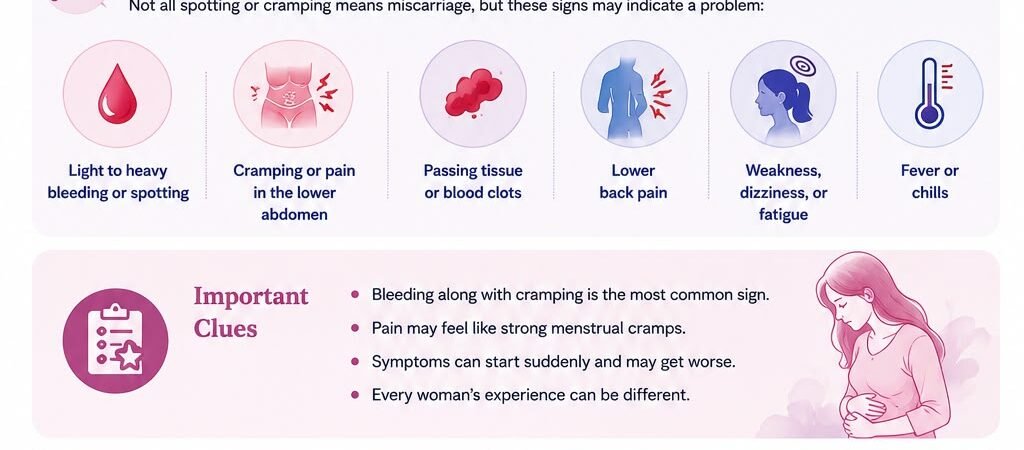
Vaginal bleeding and abdominal cramping are among the most common signs associated with miscarriage. However, these symptoms can also occur for reasons that do not involve pregnancy loss. If you are pregnant and develop bleeding, significant pain, or other unusual symptoms, it is important to speak with a healthcare professional so the cause can be properly evaluated.
Signs of miscarriage during early pregnancy
What Are the Signs of a Miscarriage?
A miscarriage does not always produce obvious symptoms. In some cases, a person may have no noticeable bleeding or pain and only discover that the pregnancy has stopped developing during an ultrasound examination.
When symptoms do occur, they may include:
- Vaginal spotting or bleeding
- Lower abdominal or pelvic pain
- Cramping that may become strong or persistent
- Passing blood clots or pregnancy tissue
- A sudden reduction in pregnancy symptoms in some cases
The presence of these symptoms does not automatically mean that a miscarriage has occurred. Bleeding and cramping can have several possible causes during pregnancy.
For this reason, anyone who is concerned about a possible miscarriage should seek appropriate medical evaluation rather than trying to determine the diagnosis from symptoms alone.
What Does a Miscarriage Feel Like?
Every miscarriage can be different.
Some people experience mild cramps that feel similar to menstrual pain, while others experience stronger contractions and more significant discomfort. Vaginal bleeding is also common and may range from light spotting to heavier bleeding.
As the miscarriage progresses, blood clots or pieces of pregnancy tissue may pass through the vagina. The amount of bleeding and the length of time symptoms continue can vary considerably between individuals.
For some people, the physical part of a miscarriage may be relatively short. For others, bleeding and cramping may continue for several hours or longer.
Your healthcare professional can explain what symptoms are expected in your particular situation and discuss appropriate options for controlling pain.
Can Bleeding During Pregnancy Always Mean Miscarriage?
No.
Bleeding during pregnancy can occur for several different reasons, and not every episode of bleeding means that the pregnancy has ended.
Similarly, abdominal or pelvic pain can have causes other than miscarriage.
Because symptoms can overlap, an examination and, when appropriate, an ultrasound or blood testing may be needed to determine what is happening.
If pregnancy bleeding is accompanied by severe pain, dizziness, fainting, or other concerning symptoms, urgent medical assessment is particularly important.
What Happens Emotionally After a Miscarriage?
A miscarriage can affect people emotionally in very different ways.
Someone may feel sadness, shock, anger, disappointment, guilt, anxiety, numbness, or even relief. Several emotions can occur together, and feelings may change from one day to the next.
There is no fixed timetable for grieving a pregnancy loss.
Some people begin to feel better after a relatively short period, while others continue to experience grief for much longer. Both experiences can be normal.
Giving yourself time to process the loss and talking with someone you trust can make the experience easier to manage.
How Can I Cope After Pregnancy Loss?
Taking care of yourself after a miscarriage involves both physical and emotional recovery.
You may find it helpful to:
- Rest when your body needs it
- Stay connected with supportive people
- Talk openly about your feelings
- Give yourself permission to grieve
- Attend recommended follow-up appointments
- Seek professional counseling if emotions become difficult to manage
A partner may also experience grief after a pregnancy loss. People do not always process miscarriage in the same way, so communication and mutual support can be important.
If you feel that you have nobody you can talk to, a doctor, nurse, counselor, or pregnancy-loss support service may be able to provide additional help.
What If I Want to Become Pregnant Again?
Many people who experience a miscarriage later have a successful pregnancy.
When you are considering another pregnancy, discuss your individual circumstances with a healthcare professional. They can advise you about recovery, future pregnancy planning, and whether any additional evaluation is appropriate.
The right time to try again can depend on your physical recovery, emotional readiness, medical history, and the circumstances surrounding the miscarriage.
If you do not want another pregnancy immediately, a healthcare professional can also discuss contraception options that may suit you.
What If I Have Had More Than One Miscarriage?
Having repeated pregnancy losses may lead a healthcare professional to recommend additional testing.
The exact evaluation depends on your history and may look for possible factors involving:
- Chromosomal or genetic problems
- Hormonal conditions
- The structure of the uterus
- Certain medical conditions
- Other factors that may affect pregnancy
Finding a possible cause does not always mean that one will be identified. However, when an underlying condition is found, treatment or appropriate pregnancy planning may sometimes improve the chances of a future healthy pregnancy.
When Should I Seek Urgent Medical Attention?
Not every miscarriage requires emergency treatment, but some symptoms should never be ignored during pregnancy.
Seek urgent medical care if you have:
- Very heavy vaginal bleeding
- Severe or increasing abdominal or pelvic pain
- Fainting or feeling as though you may pass out
- Significant dizziness or weakness
- Fever or chills
- Severe pain on one side of the abdomen
- Shoulder pain occurring with abdominal pain, weakness, or dizziness
These symptoms can sometimes indicate a serious complication, including ectopic pregnancy or significant blood loss.
How Is a Miscarriage Confirmed?
Symptoms alone cannot always establish whether a miscarriage has occurred.
Depending on the situation, a healthcare professional may use an ultrasound, pregnancy-related blood tests, medical history, and examination to determine whether the pregnancy is continuing and whether pregnancy tissue remains inside the uterus.
If a miscarriage is confirmed, the appropriate management can then be discussed. Options may include waiting for the body to complete the process naturally, medication, or a medical procedure, depending on the individual circumstances.
Final Thoughts
Bleeding or cramping during pregnancy can understandably cause worry, but these symptoms do not always mean miscarriage. A proper medical assessment is the safest way to determine what is happening.
If a miscarriage has occurred, remember that pregnancy loss is often not caused by something you did. Physical recovery and emotional recovery can take different amounts of time, so give yourself appropriate care and support.
If you experience severe pain, heavy bleeding, fainting, fever, or other concerning symptoms, seek medical attention promptly.